Blog
Cooling the Cloud Costs less Than You Think
An annual levelized cost comparison finds that thermal energy storage undercuts lithium-ion batteries by 40% for unlocking data center compute capacity — and the math starts with ice.
Yoram Ashery / CEO
31 Mar 2026



The Problem
AI Is Hungry. Power Grids Can't Keep Up.
The artificial intelligence boom is creating a power crisis that has nothing to do with servers. In modern data centers, the bottleneck isn't compute — it's electricity. And the largest non-compute drain on that electricity is - cooling.
According to the U.S. Department of Energy, cooling systems can consume up to 40% of a data center's peak power load. As demand for AI and cloud services accelerates, that 40% is increasingly the difference between running more workloads and turning away customers.
The limiting factor in many modern data centers is not server capacity — it is the total power available to the facility. Cooling can unlock a lot of that “stranded” capacity.
This has forced a rethink of where energy storage fits in data center infrastructure. The traditional answer has been lithium-ion battery backup systems. A new contender — thermal energy storage using frozen water — challenges that assumption on both efficiency and cost grounds.
The Technology
Two Ways Frozen Water Frees Up Compute Power
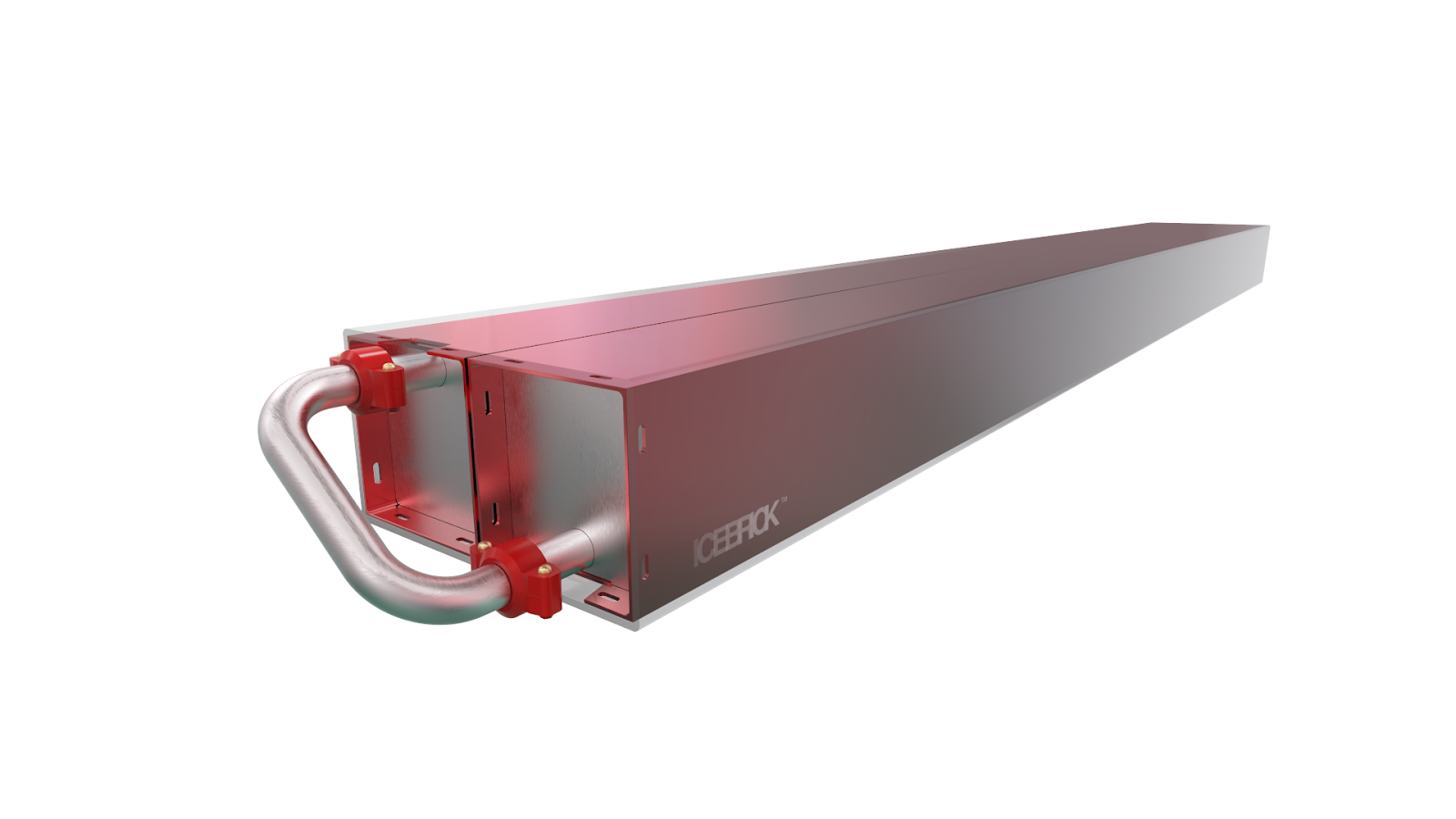
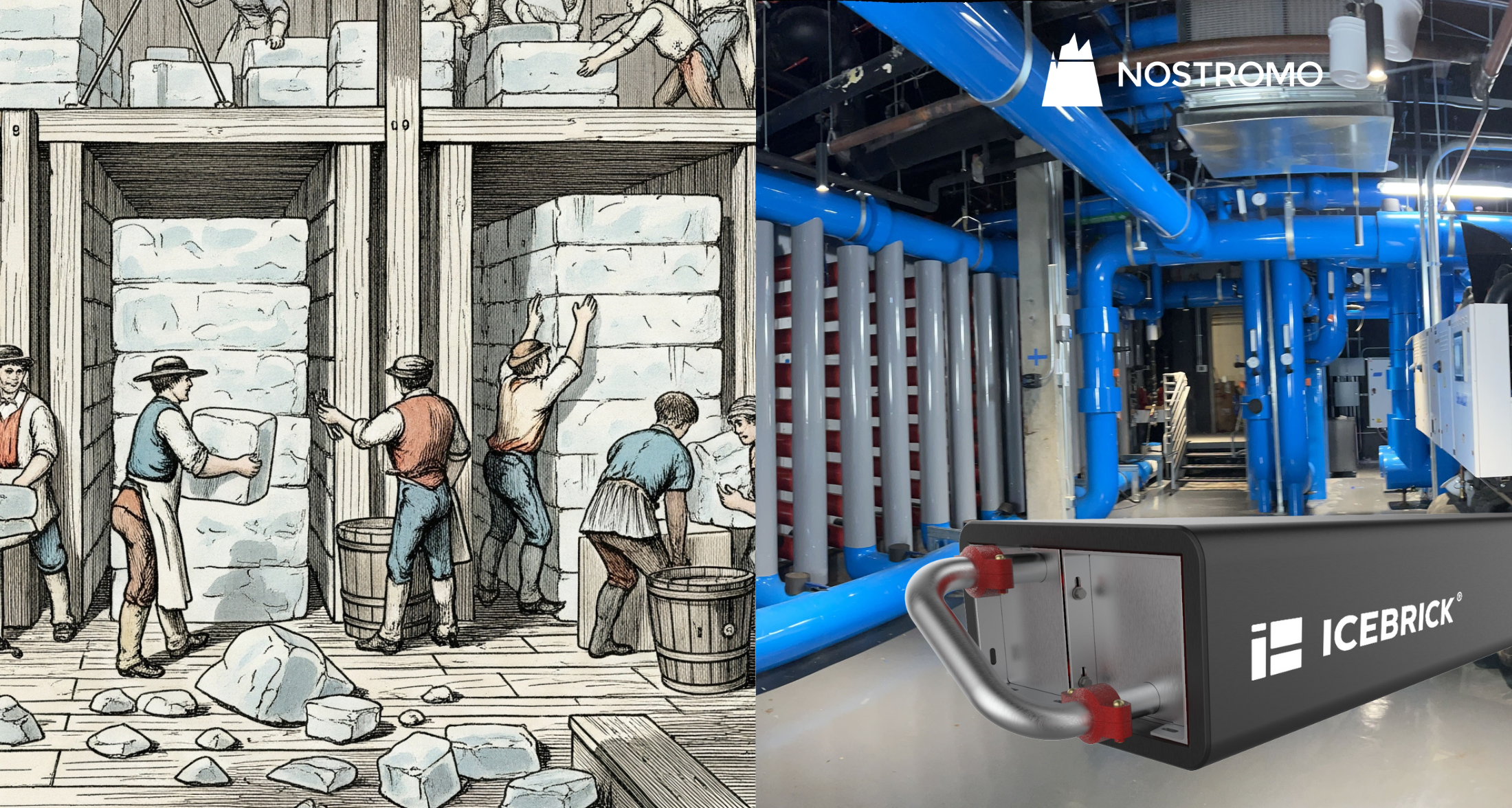
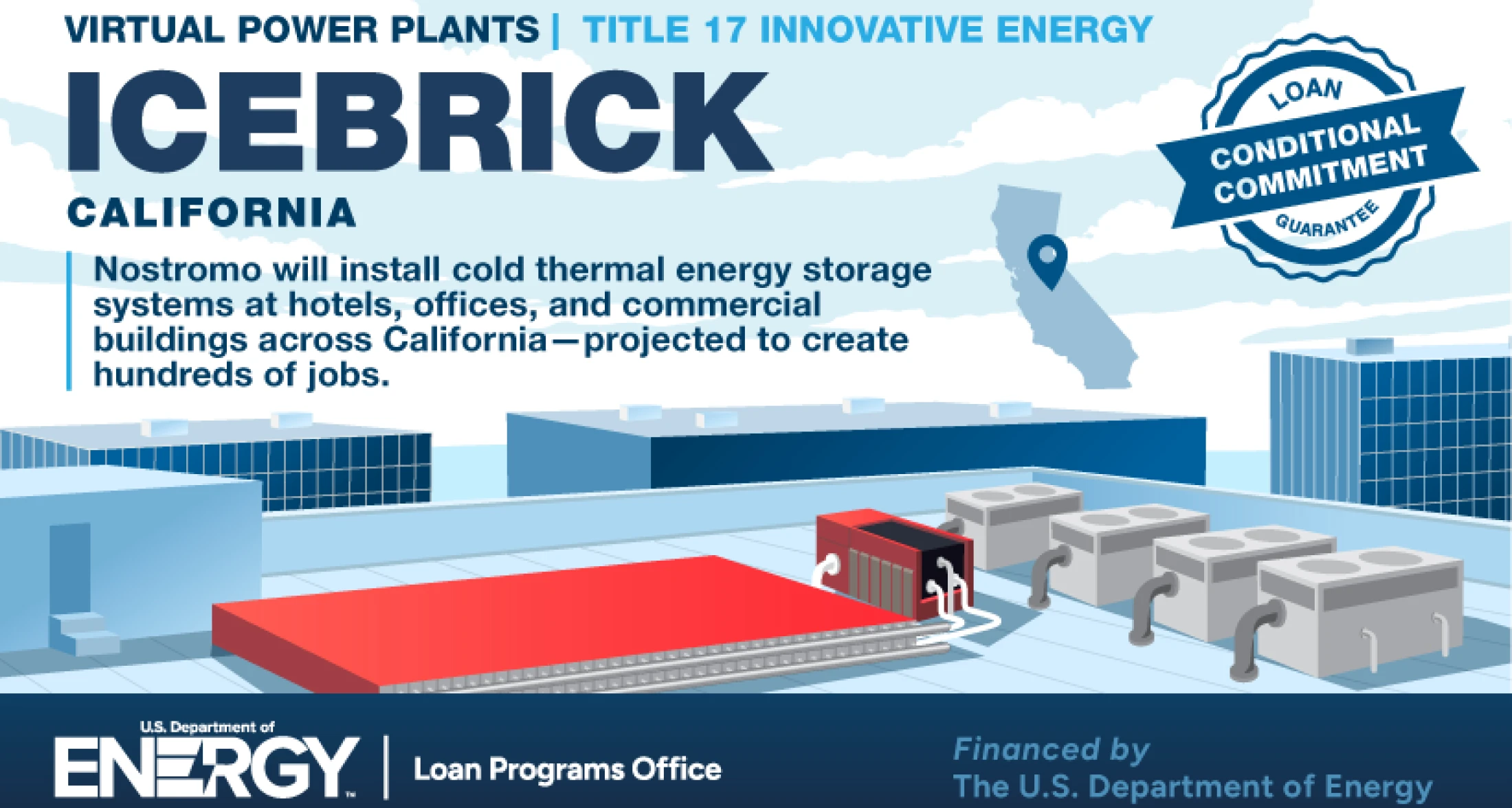
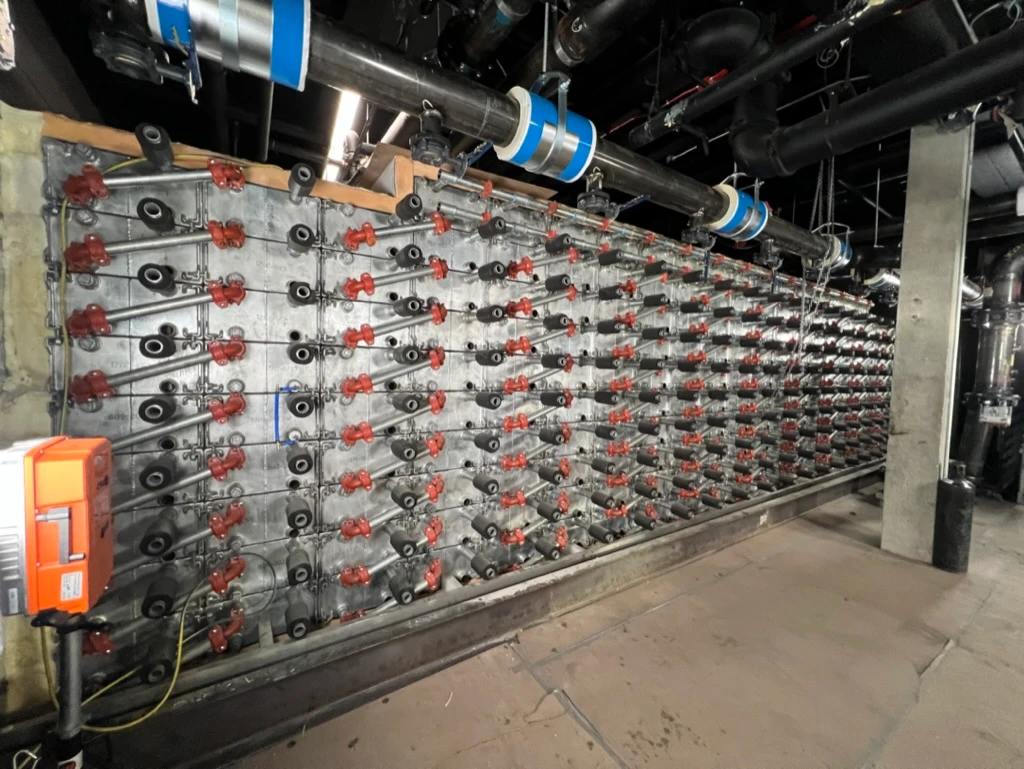
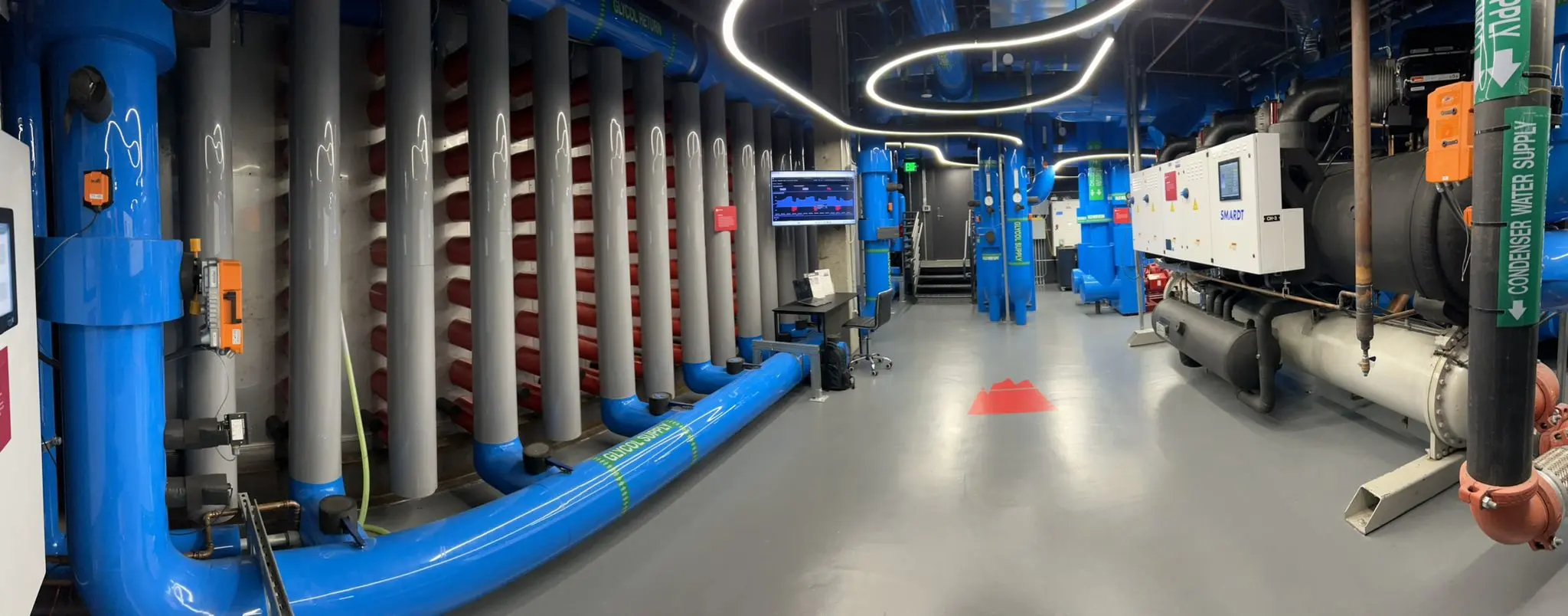
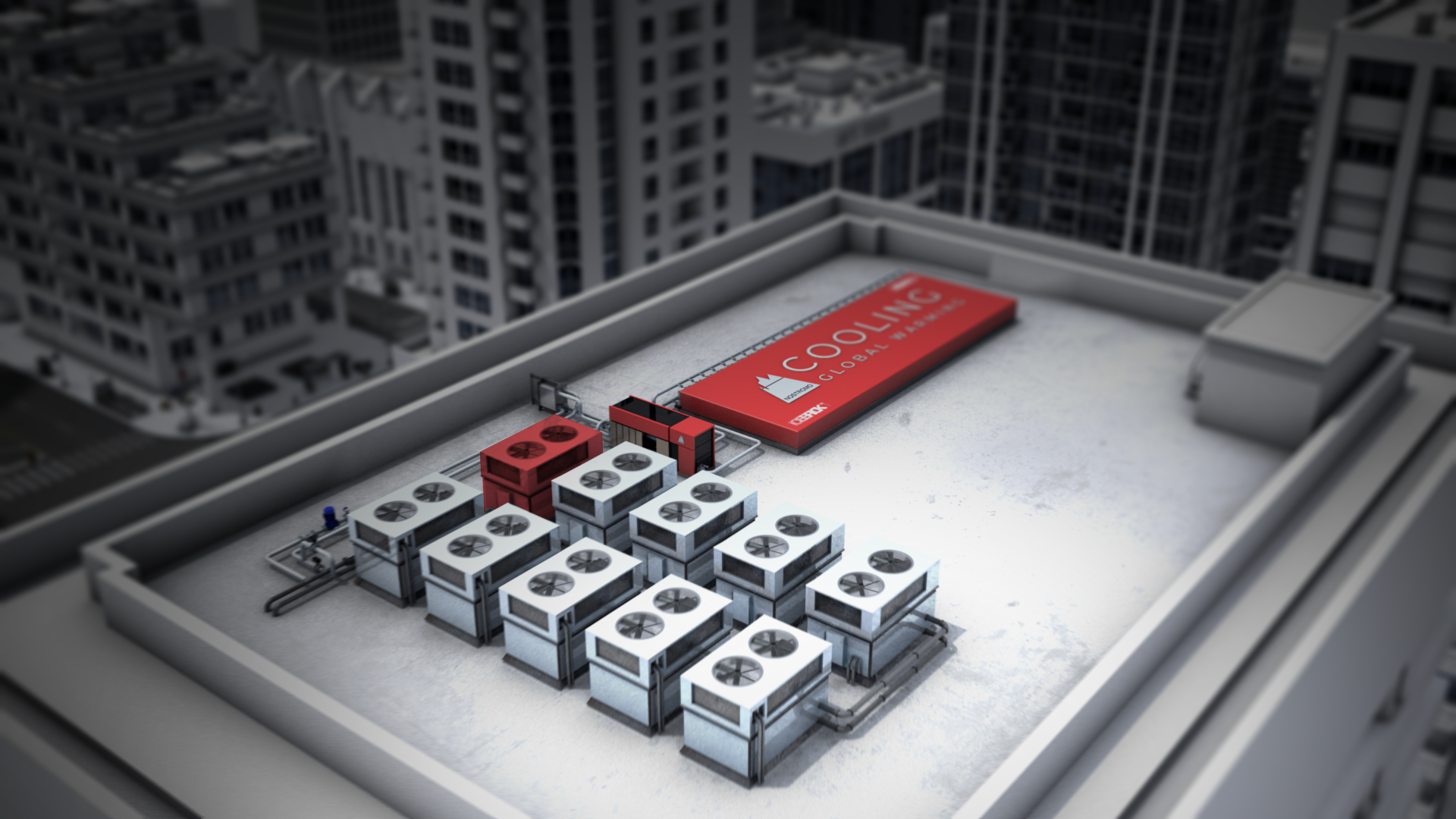
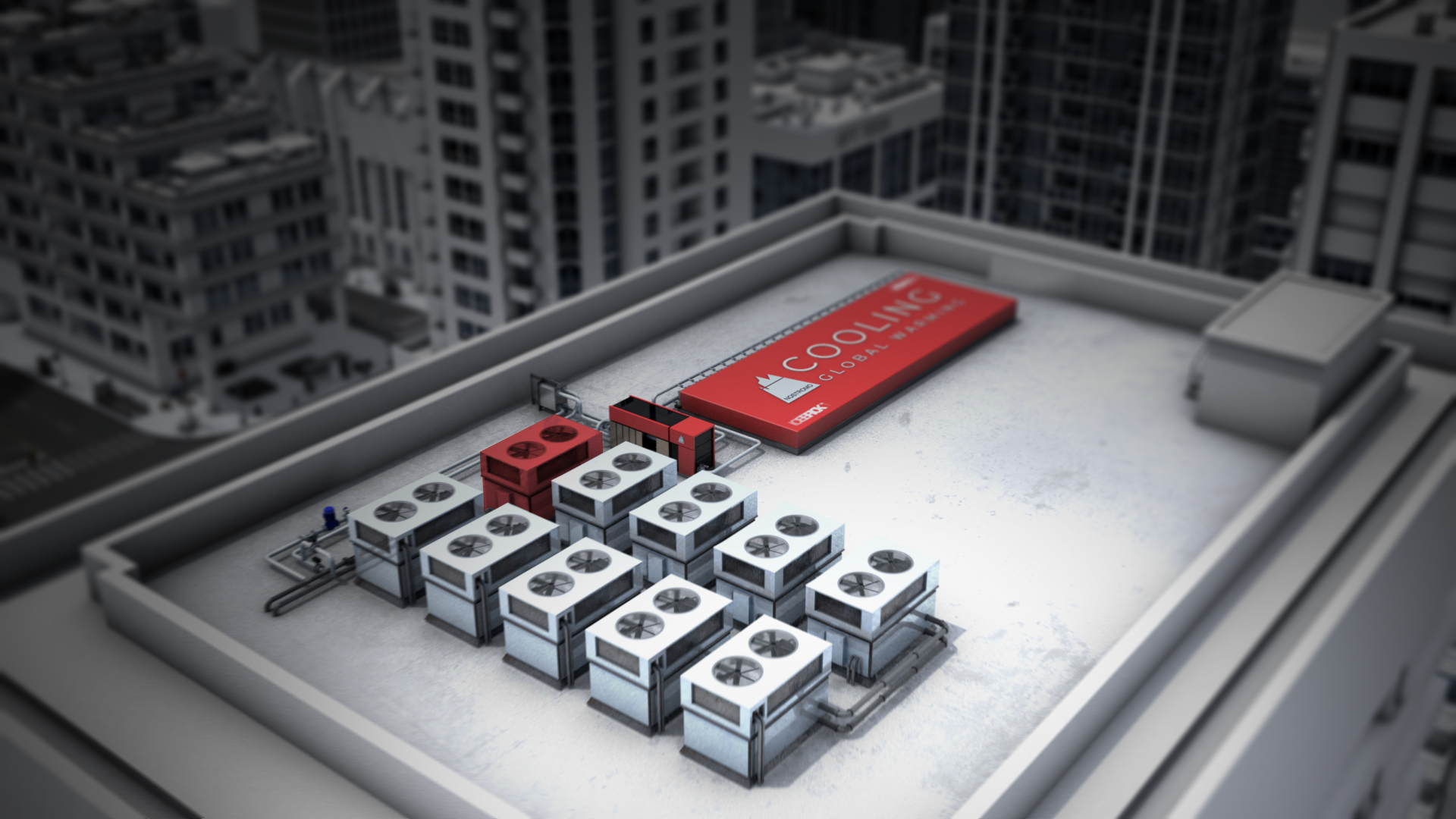
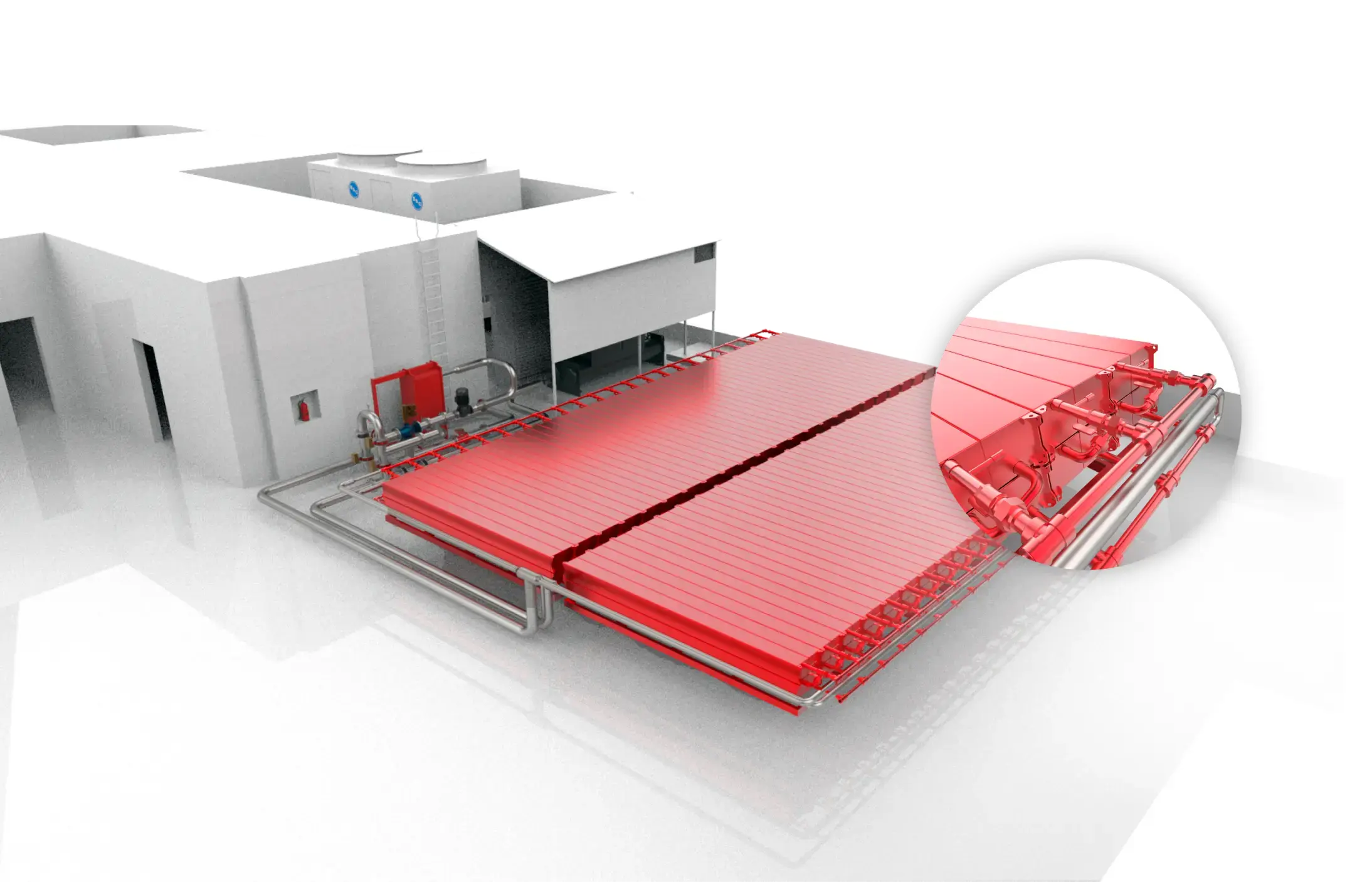
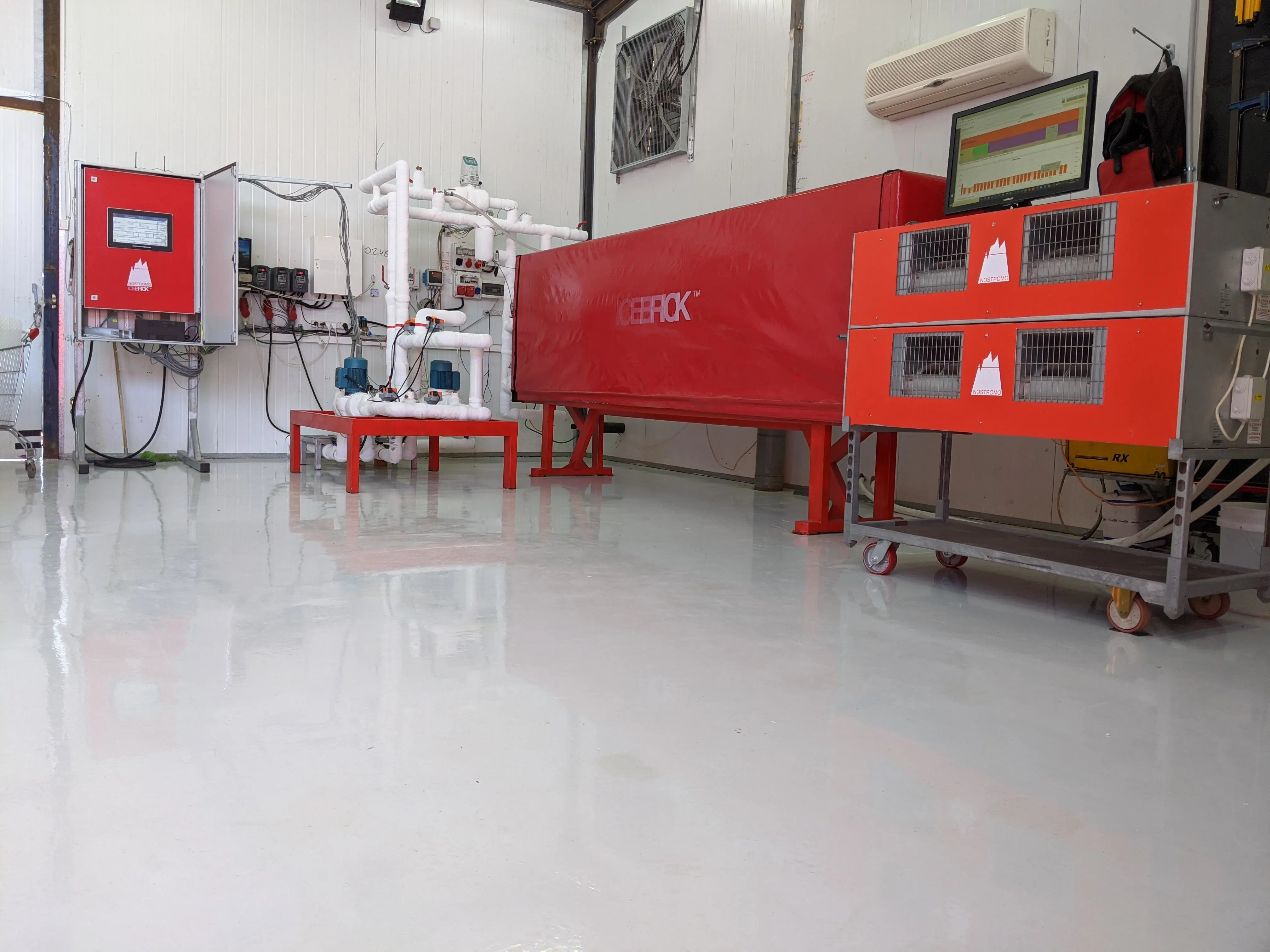
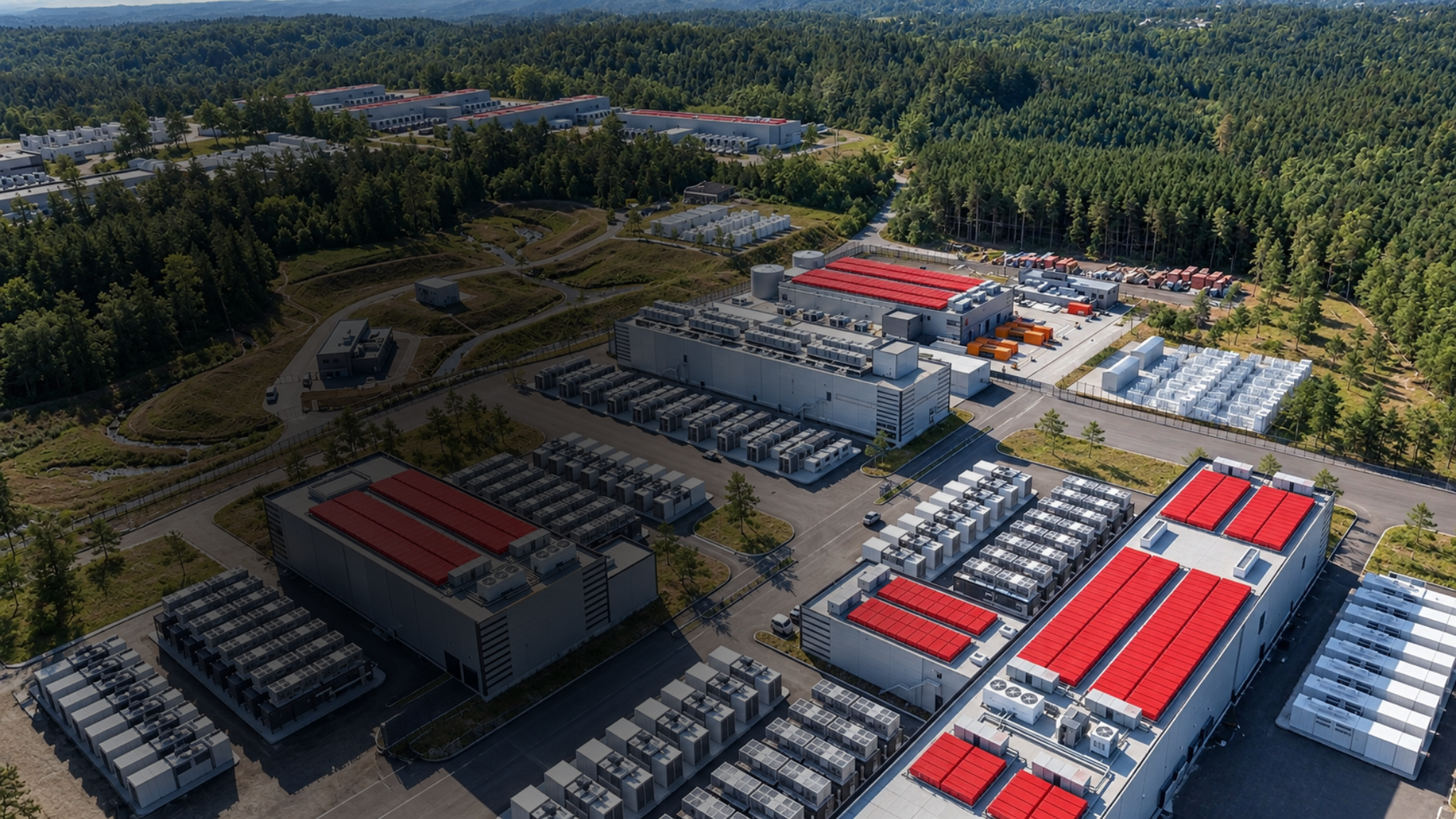
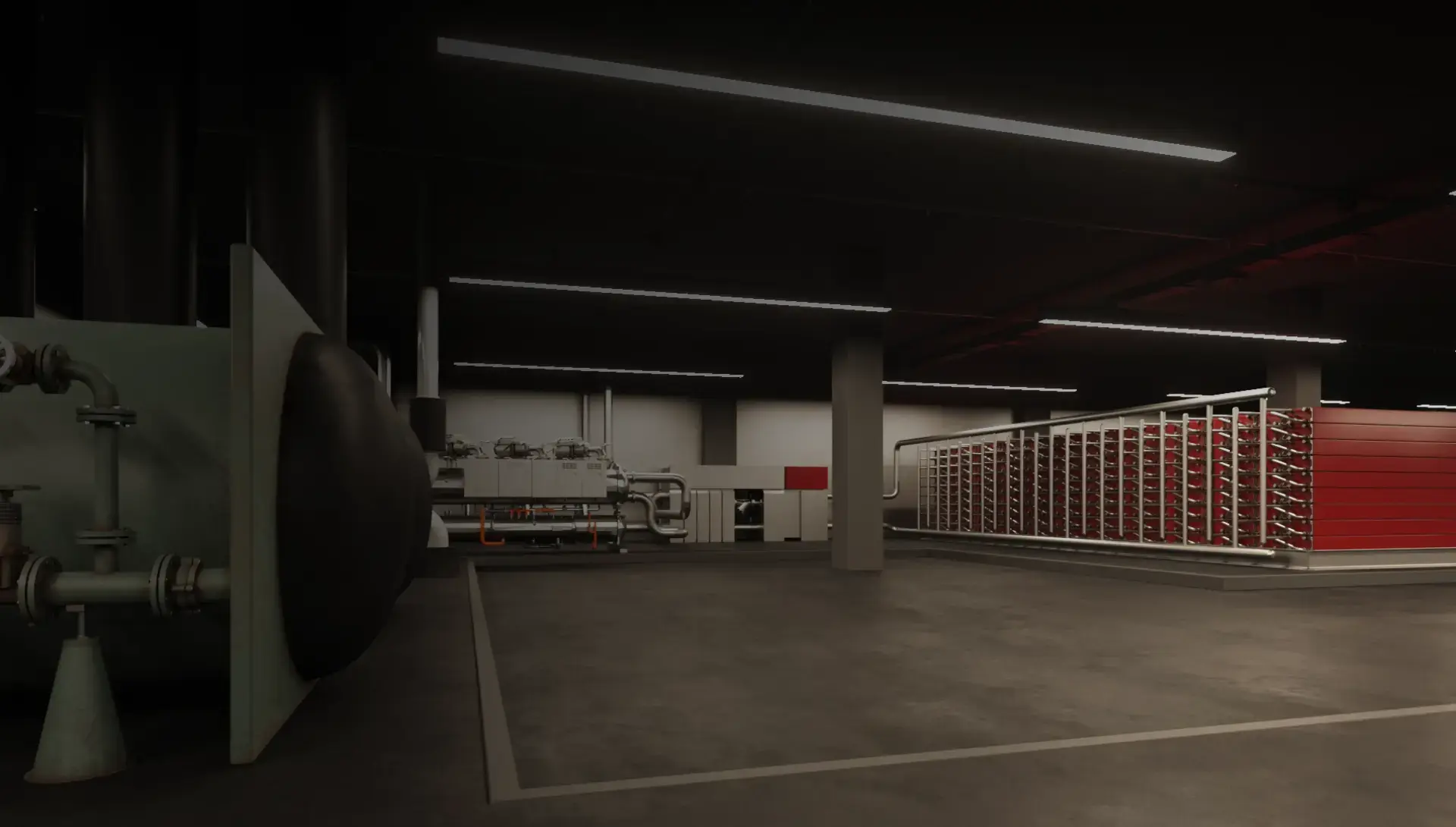
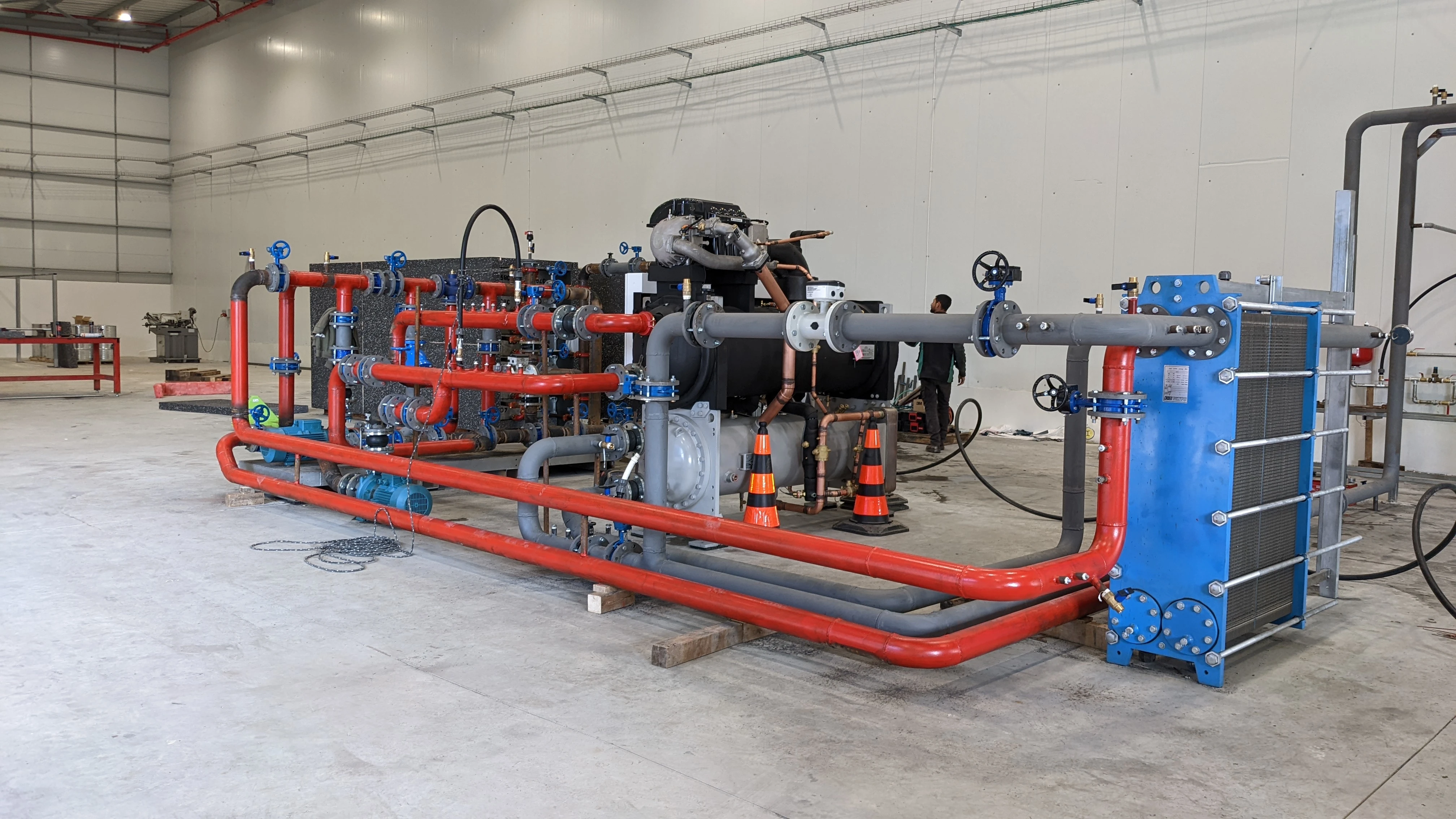
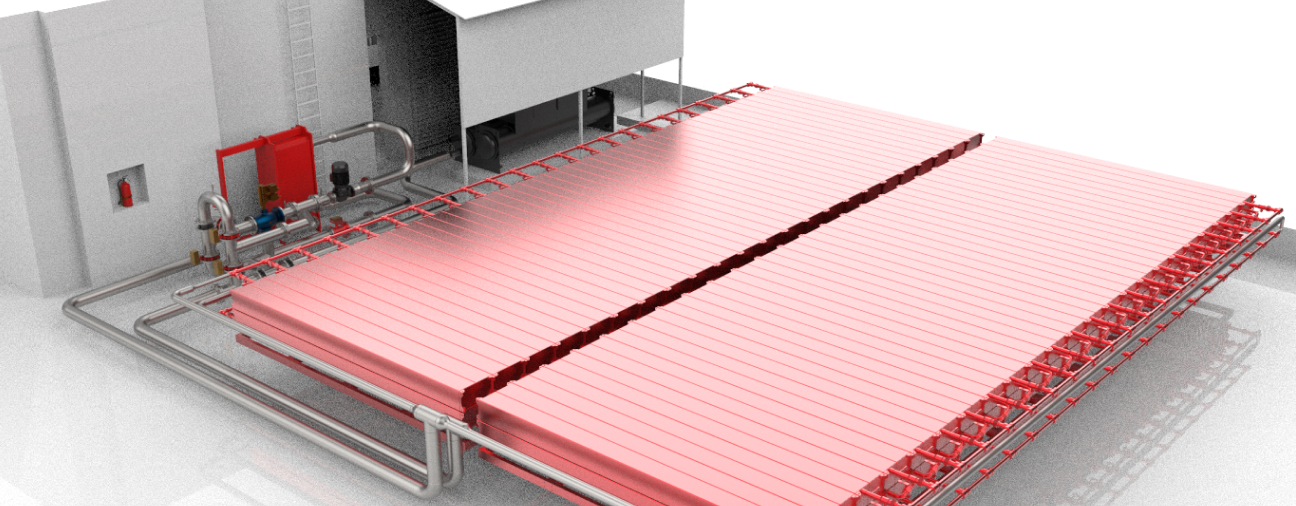
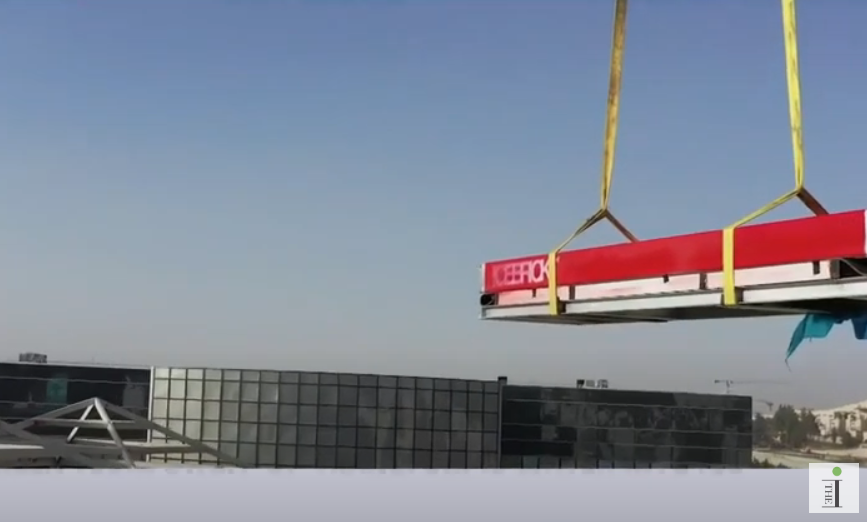
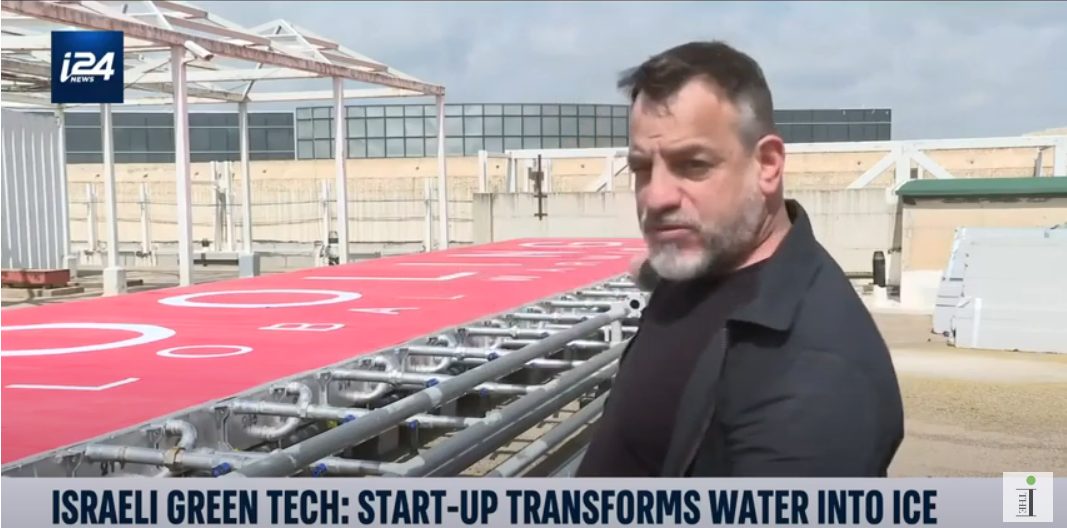
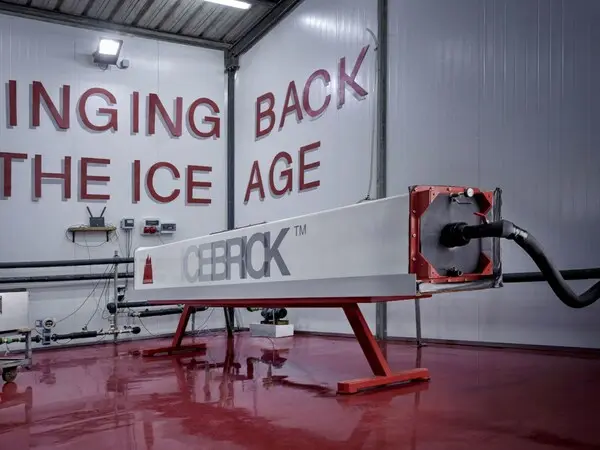
IceBrick® (Nostromo Energy, Inc., Irvine, CA) stores energy as thermal mass — essentially, ice — and releases it as cooling capacity when the data center needs it most. Unlike a battery, which simply stores and discharges electricity, this system exploits two separate efficiency advantages simultaneously.
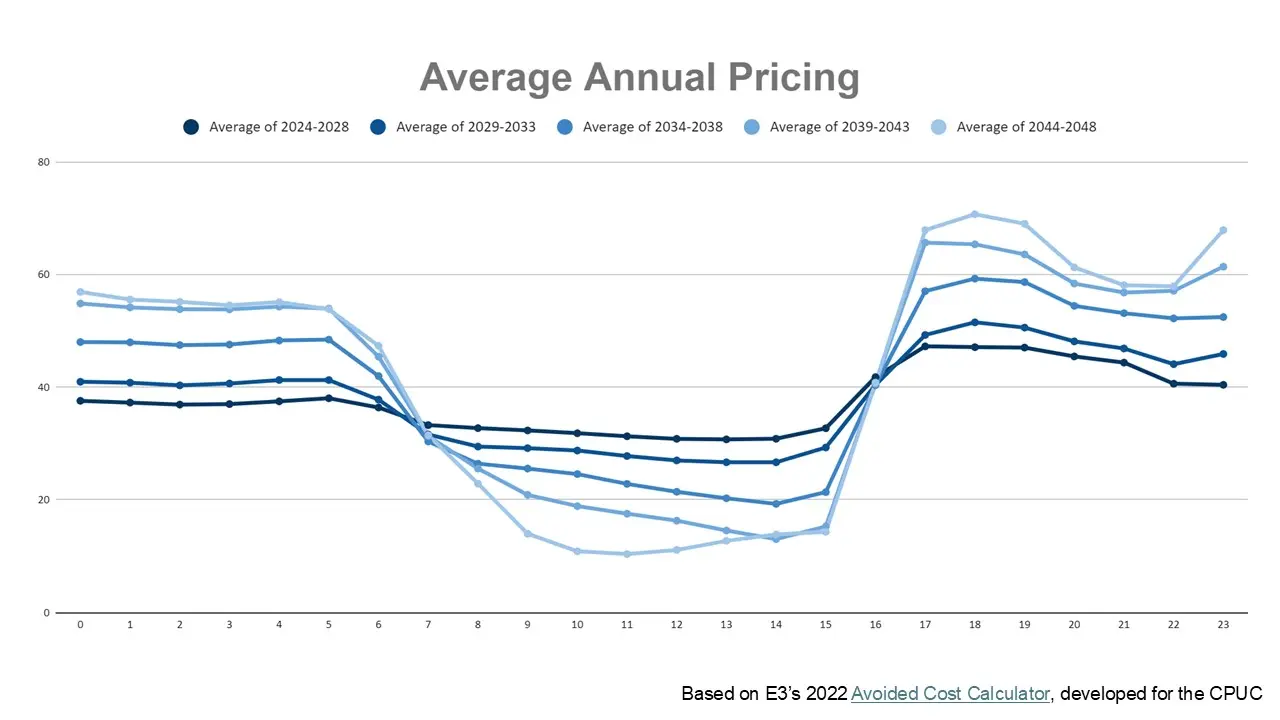
Advantage #1 — Nighttime charging: The system freezes water at night, when ambient temperatures are lower. Chillers operating in cooler conditions require significantly less electricity per unit of cooling delivered. Charging is therefore inherently more efficient.
Advantage #2 — Daytime efficiency boost: When the stored cold energy discharges during peak daytime hours, it reduces the cooling load on the data center's chillers. Chillers running at partial load typically operate more efficiently than chillers running flat-out — meaning the remaining mechanical cooling also consumes less electricity.
Lithium-ion batteries shift loads. Thermal storage shifts loads and makes everything around it run better.
Lithium-ion batteries, by contrast, have no efficiency multiplier. They dispatch stored electricity, but — critically — the additional electrical activity they introduce actually degrades chiller efficiency, partially offsetting their capacity benefit.
Efficiency Data
90% vs. 50%: The Utilization Gap
A published case study comparing the two technologies found a stark difference in how effectively each converts storage capacity into usable compute power.
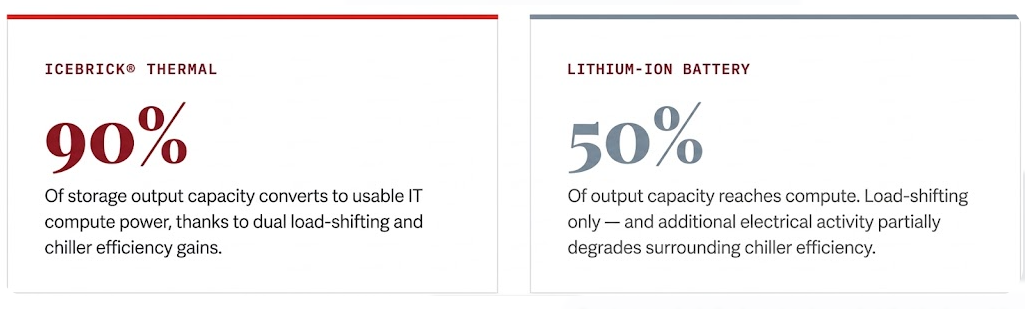
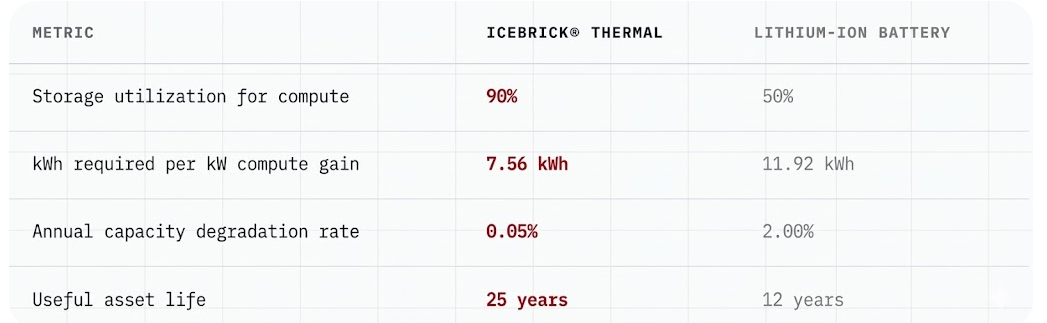
This case study found that IceBrick requires 7.56 kWh of storage per kW of compute capacity gained, versus 11.92 kWh for lithium-ion — nearly 58% more storage capacity needed for the same IT benefit.
Asset Life
One Ice System. Two Battery Life-Cycles.
Capital cost comparisons can mislead when assets have dramatically different lifespans. At $640/kWh, IceBrick costs more per unit of storage capacity than lithium-ion at $467/kWh (NREL Annual Technology Baseline). But that comparison obscures the asset economics.
A single IceBrick installation operates for 25 years. Lithium-ion batteries must be replaced after 12 years — meaning a data center using batteries will purchase and install two complete battery systems over the same period, paying capital costs twice plus bearing the decommissioning and replacement burden.

Degradation compounds the difference. IceBrick loses only 0.05% of capacity per year. Lithium-ion degrades at 2.00% annually — 40 times faster — steadily shrinking its effective contribution to compute capacity over time.
Levelized Cost Analysis
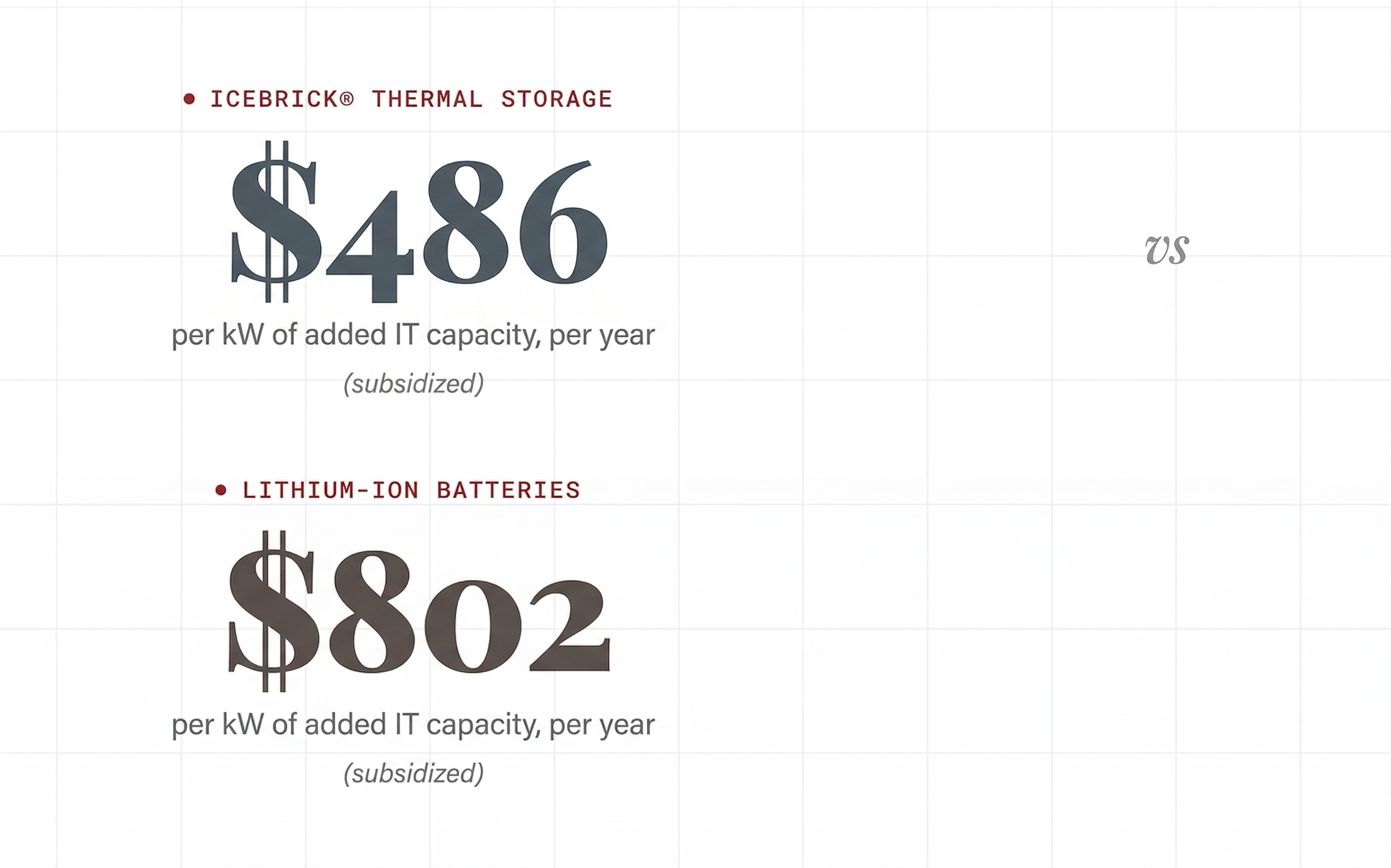
The Final Number: $486 vs. $802
To compare the technologies on equal footing, the study authors applied the Levelized Cost of Storage for Compute (LCOSC) methodology — a modified version of the standard levelized cost of energy framework used in power economics. Rather than measuring cost per kWh of energy output, LCOSC measures cost per kW of sustained IT capacity gained, discounted over the full useful life of the asset at a 10% interest rate with 2.5% annual CPI adjustment of O&M costs.
Assumed O&M costs were $13.33/kWh-yr for IceBrick versus $11.26/kWh-yr for lithium-ion. Neither technology's fuel/operating costs were included, as they are identical for both and typically passed through to data center customers.
IceBrick is manufactured in the US and therefore qualifies for a 40% Investment Tax Credit (including the 10% “domestic content” adder). Lithium-ion batteries when manufactured in the US will also qualify for 40% ITC, but if the selected product is imported, it will qualify only for 30% ITC. In that case the gap in favor of IceBrick widens to 46%.
Market Context
The Revenue Opportunity Is Real
These numbers exist against a specific market backdrop. Data center capacity currently rents at an average of approximately $195/kW per month — or $2,340 annually per kilowatt of IT capacity with record-low vacancies below 2%.*
At $486/kW-yr (subsidized), unlocking a single kilowatt of additional IT capacity via IceBrick costs about one-fifth of the annual revenue that capacity can generate. The margin is meaningful — and it compounds across hundreds or thousands of kilowatts in a large facility.
An annual cost of under $500/kW-yr to unlock capacity that bills at $2,000+/kW-yr represents a substantial and defensible return on infrastructure investment.
The analysis also notes that if expanding IT capacity simultaneously requires more cooling capacity, IceBrick provides an additional advantage: that cooling infrastructure is already built into the system. Battery deployments would require a separate, parallel cooling expansion.
Conclusion
"Stranded Capacity" Is a Solvable Problem
The term "stranded capacity" describes a common and costly data center condition: infrastructure that exists but cannot be used because power constraints prevent it from being committed to service. As grid power remains constrained in the face of AI-driven demand growth, extracting every possible kilowatt from existing electrical infrastructure becomes a primary priority.
This cost analysis demonstrates that thermal energy storage, evaluated through a rigorous levelized-cost methodology, is not merely a novel alternative to lithium-ion batteries — it is demonstrably a more cost-efficient and longer-lived solution for the specific task of expanding compute capacity within power-constrained data centers.
The efficiency advantage (90% vs 50% resource utilization) and the longer lifespan (25 vs 12 years) all compound in the same direction. The result is a 40–46% annual cost difference favoring IceBrick for the same IT capacity benefit.
In an industry where the power bill is already the largest operational variable, that difference matters enormously.
Analysis based on: "Cost-Performance of Energy Storage for Unlocking Data Center IT Capacity: Thermal vs Electrochemical," Nostromo Energy, Inc.
Capital cost data: NREL Annual Technology Baseline (batteries); Nostromo Energy, Inc. (IceBrick). Cooling load data: U.S. DOE Industrial Technologies Office.
All cost figures in USD. Discount rate: 10%. CPI assumption: 2.5%. ITC rates: IceBrick 40% (domestic content adder included); lithium-ion 30%.
[Footnote]
* CBRE North America Data Center Trends H2 2025 (February 25, 2026, Link)
Related Blog Posts
BLOGS