
PROFILE /Data Centers
More Power Faster
Accelerate power and increase capacity by controlling cooling loads and boosting efficiency
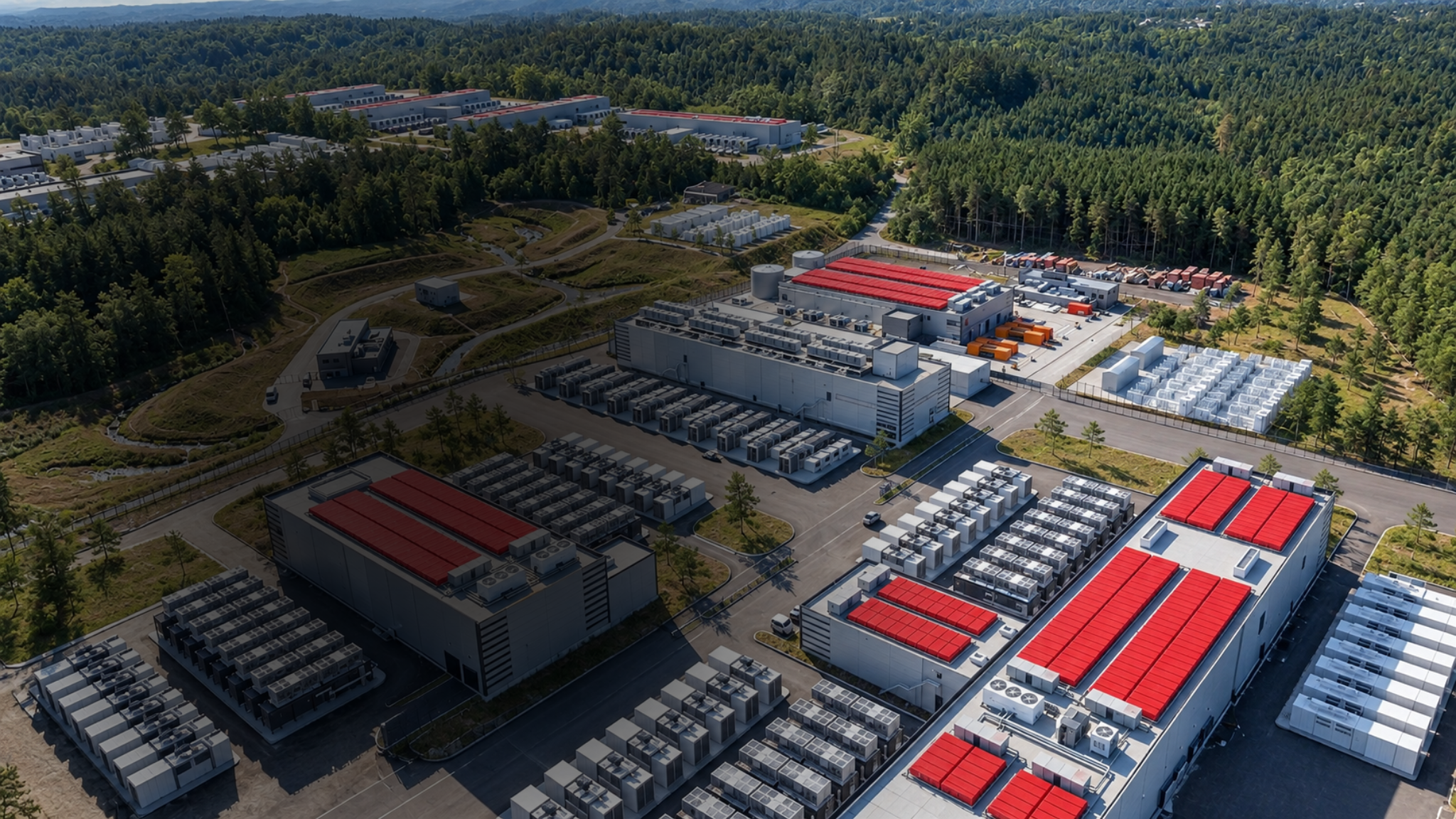
Nostromo’s IceBrick® technology shifts data center’s cooling loads away from peak hours, to maximize compute capacity under existing connections and help power-up new sites faster.

How It Works
The IceBrick thermal energy storage system integrates into the facility’s chilled water loop, to shift cooling loads away from peak hours - PUE or overall demand on the grid. These ice batteries discharge energy during ambient peak hours of the day and recharge at night when ambient temperatures are low, to reduce peak PUE, free-up stranded capacity, and integrate load flexibility to help meet a site’s curtailment commitments.
The compact and modular IceBrick® packs powerful benefits


Deploy Fast
Accelerate time to power and more IT capacity without special permits or long-lead time solutions

More IT. Same Infrastructure.
IceBrick solves both power and cooling capacity, compared to batteries and other power-only solutions that depend on more cooling

Efficiency
When discharging, the IceBrick also makes the facility's chillers work more efficiently, to free up more power for compute.

Resilience
Energy storage that protects against both power and cooling failure (your N+X)
Add significant compute without new grid connection
IceBrick can add up to 15% compute capacity on existing grid connections, or make cooling loads flexible to help increase connections. Unlock even more IT capacity when cooling capacity is the constraint. Download the Brochure for details.


A safe, modular, and 100% recyclable way to maximize your compute power without the complexity of new permits. Start utilizing every watt of your total power capacity.

A Fully-Financed Service Solution
No need to tie-up capital. The IceBrick solution is available either to purchase or through Nostromo’s turnkey, fully-financed Energy Storage as-a-Service (ESaaS) program, with zero upfront cost.
Use Cases
IceBrick Unlocks 40% More IT Capacity Compared to Batteries
Read
IceBrick levelized annual cost is 40-46% less than batteries
Read
Energy Efficiency
Read
Investment Deferral
Read
Cutting Carbon Emissions
Read