Blog
IceBrick Unlocks 40% More IT Capacity Compared to Batteries
Batteries add heat and strain cooling systems, so only ~50% of their energy powers IT. IceBrick does the opposite reducing cooling load and delivering up to 90% of its energy to compute.
Kobi Zohar / VP Core R&D and Quality
1 Apr 2026


Synopsis
IceBrick enables materially higher revenue-generating capacity by both load shifting (from high to low PUE time) and cooling efficiency (reducing cooling loads on chiller plant). By contrast, batteries are not only limited to only shifting load but also reduce cooling efficiency due to increased compute load. As a result, 90% of IceBrick energy output is available to power IT workload, compared to only 50% of battery output.
Background
A 10 MW colocation facility with air-cooled chillers has reached its peak power limit during daytime operations and increasing connection is not available or too costly. Therefore, two energy storage solutions were evaluated, to take advantage of the intraday variations in PUE during the “design day”, due effect of differences in ambient temperature on chiller efficiency.
• Batteries
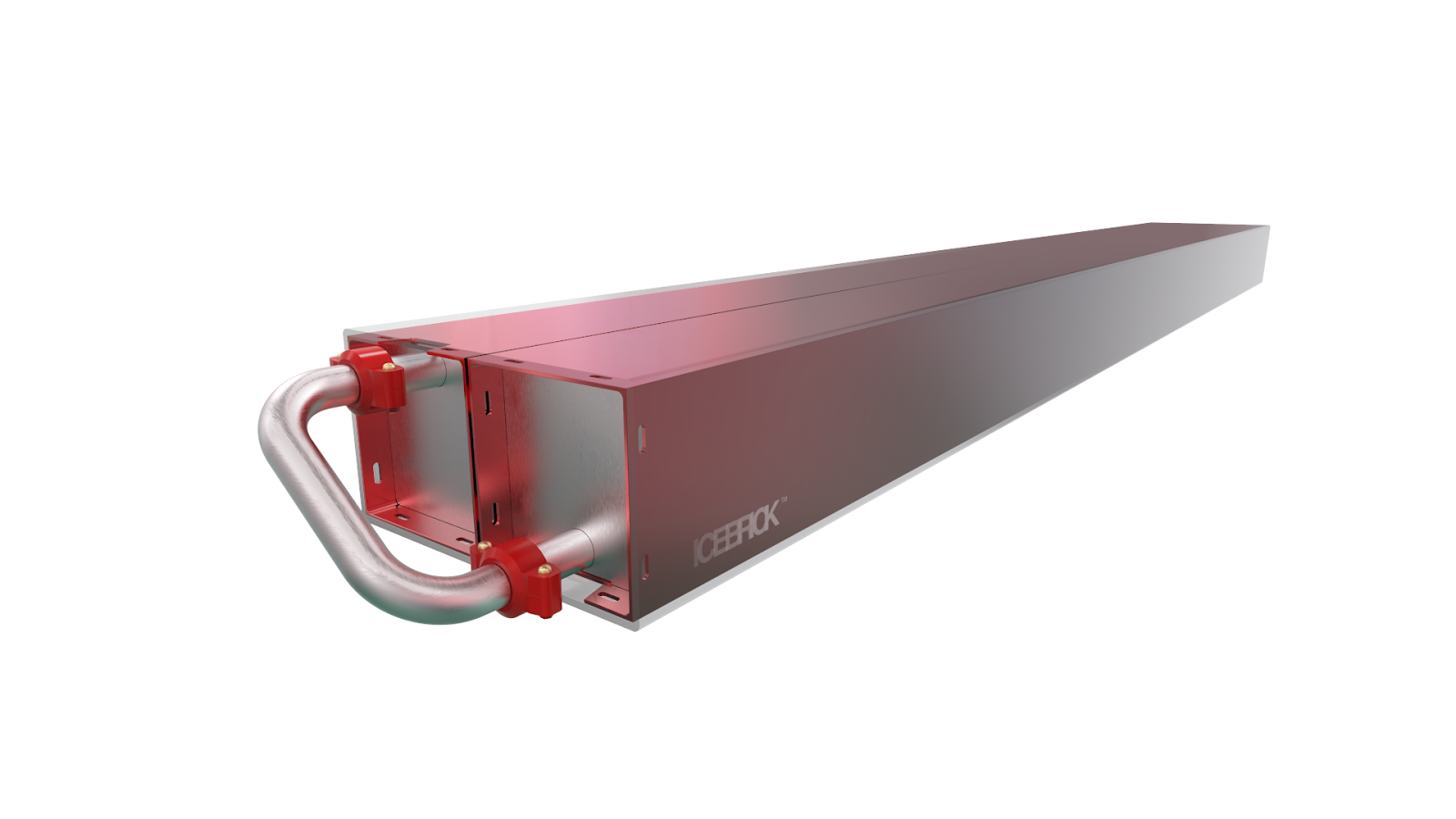
• IceBrick thermal energy storage (Nostromo Energy)
Both storage technologies can shift loads and take advantage of low, night-time PUE for charging and reduce the high, cooling-driven day-time PUE when discharging, thereby freeing-up power from cooling to IT workload. However, since air-cooled chillers typically lose efficiency as loads grow over 50% of their capacity (see Figure 1), the added compute workload powered by batteries comes at an efficiency cost due to the increased cooling load, hence less of the battery output remains available for compute. By contrast, when IceBrick discharges, it takes load off the chillers, making them more efficient, thereby freeing more power for compute (in addition to the benefit of shifting charging to night-time low PUE).
Results
Battery Performance
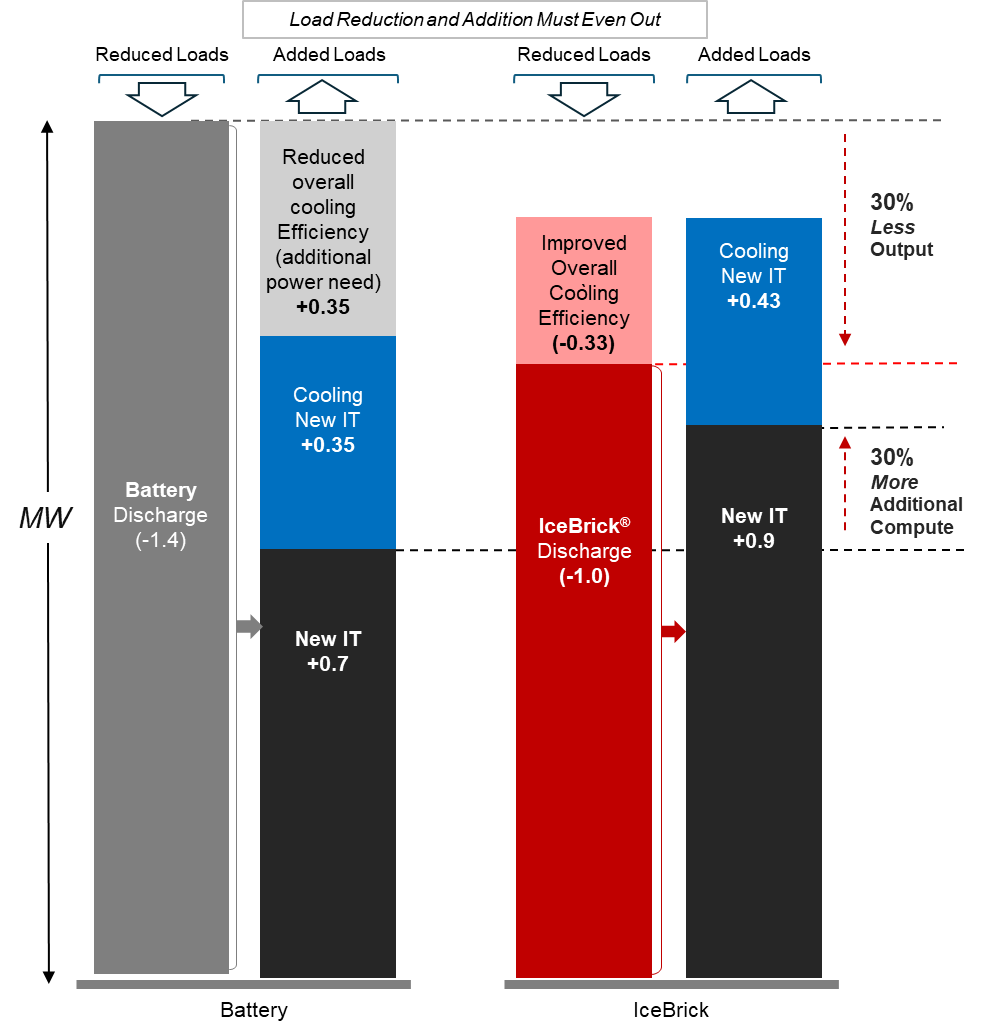
BATTERIES allow electrical load shifting but increases cooling demand during peak hours. Chillers operate at higher loads (~100%), reducing efficiency (~1.25 kW/ton) (see Figure 1). As a result, only ~50% of battery output is available to power IT workload (see Figure 2).
IceBrick Performance
IceBrick stores cooling energy at night and discharges during peak hours, reducing chiller load. This shifts operation to ~60% load, improving efficiency (~0.9 kW/ton) (see Figure 1). Approximately 90% of storage output is available to power IT workload (see Figure 2).
Summary
IceBrick delivers ~30% more IT capacity with ~30% less storage.
IceBrick: 1.0 MW storage → 0.9 MW IT capacity (90% of storage becomes usable capacity)
Battery: 1.4 MW storage → 0.7 MW IT capacity (50% of storage becomes usable capacity)
Figure 1
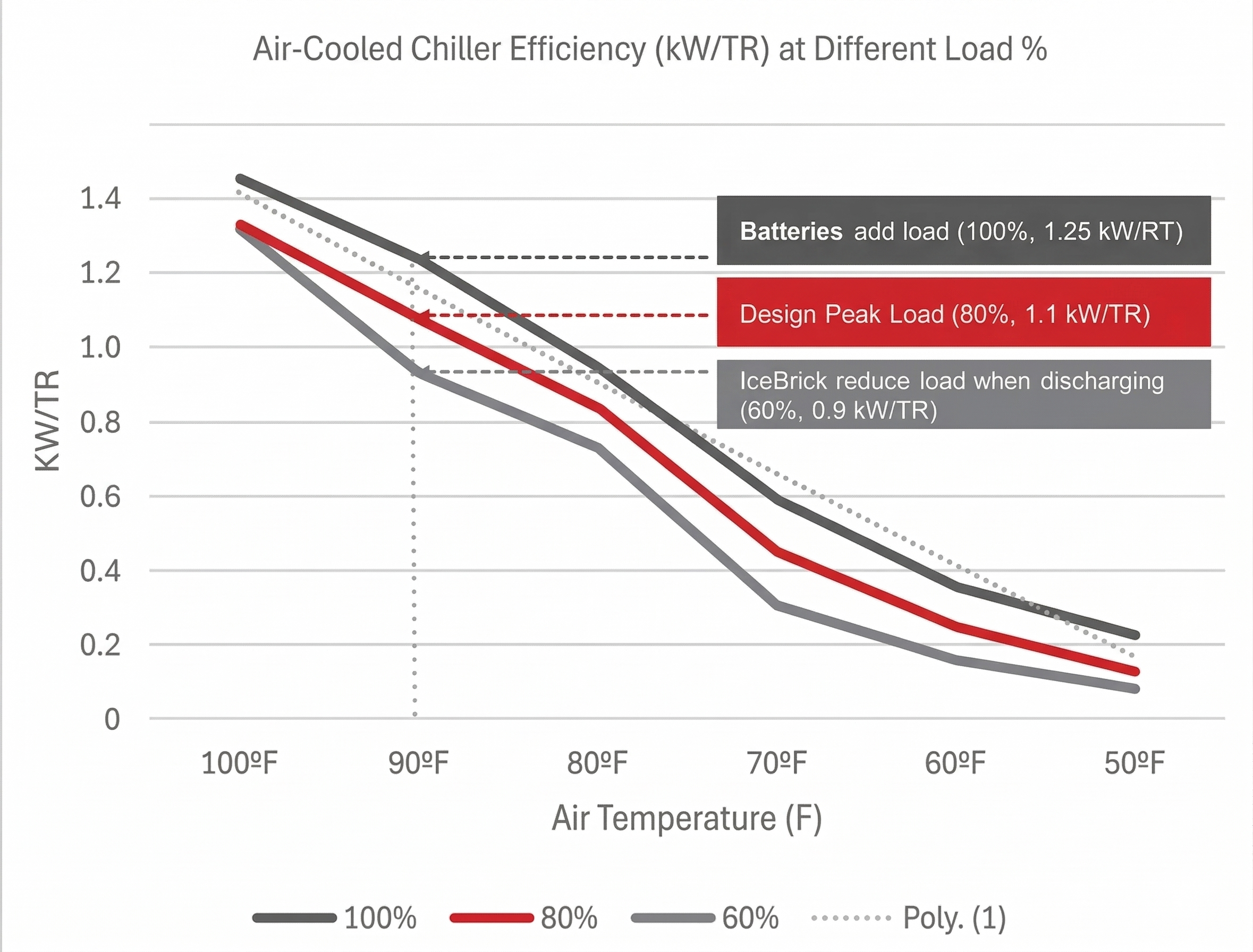
Figure 2
Discussion
In this example, IceBrick increased sellable IT capacity (~9%) without new grid power (vs. ~0.7% by batteries), with smaller storage size (1.0 MW vs 1.4MW battery).
Additional advantages of IceBrick include:
Enables higher-density customer deployments
Supports retrofit and constrained urban facilities
Provides backup cooling
Inherently safe (no fire risk)
No special permitting required
Long lifespan (+22 years) and minimal degradation (~0.05%/year)
Conclusion
For colocation and other data centers using air-cooled chillers, maximizing revenue per MW of available power is critical. IceBrick not only shifts load but improves system efficiency, unlocking more sellable capacity within existing infrastructure, using 90% of storage output. By comparison, batteries utilize only 50% of capacity for compute, as it can only shift loads while reducing chiller efficiency by the added IT workload. This fundamental difference makes IceBrick a superior solution for scaling capacity in data centers constrained by either power or cooling capacity, particularly if both.
Related Blog Posts
BLOGS